
The Recipe for Salvation

Every good recipe begins with intention.
In Luke 9:51, we read a turning point in the life of Jesus. The NIV puts it this way:
“Jesus resolutely set out for Jerusalem.”
The definition of resolutely is “in an admirably purposeful, determined, and unwavering manner.”
Other translations phrase it differently, “He set His face,” “He was determined,” “He steadfastly turned toward.” But every version carries the same weight.
Jesus turned.
He faced what was coming.
And He walked toward it.
Jerusalem wasn’t a vacation destination. It was the collision point of history. It was betrayal, injustice, suffering, and crucifixion. And yet, Scripture tells us He resolutely set out.
The rest of His entourage had no idea what was unfolding. They were still arguing about greatness, still misunderstanding the mission. Hindsight gives us the luxury of reflection and sometimes the arrogance of assuming we would have responded differently.
But on that road to Jerusalem, only one person fully understood the cost of the recipe. And He kept walking.
A Different Kind of Easter Recipe
It always amuses me how Easter, at least in much of the Western world, gathers us around dyed eggs, rabbits, and a ham.
When Kerry and I married, I was fully introduced to the American Easter experience: coordinated outfits, big church services, and the post-church meal with family and friends.
Experiencing those traditions together made me realize how different Easter had felt growing up in Kenya.
Funny enough, it wasn’t usually a big production. Church sometimes happened in simple buildings, sometimes on porches, sometimes outside with Mount Kilimanjaro in the distance. There weren’t elaborate traditions or decorations, but the meaning of Easter was always there.
Somewhere between East Texas traditions and East Africa realities, the recipe shifted, but the deeper meaning remained.
Because whether under stained glass or under an African sky, the heart of Easter has never been about colored eggs or carved ham.
It has always been about a recipe for salvation.
The Ingredients
Jesus knew exactly what this recipe required:
- Obedience
- Surrender
- Sacrifice
- Love without retaliation
- Forgiveness without condition
He didn’t stumble into Jerusalem. He didn’t get swept up in events beyond His control. He resolutely set out.
Every step toward Jerusalem was a measured, willing step toward the cross. The cross was not an accident. It was the central ingredient.
Without the cross, there is no resurrection.
Without sacrifice, there is no salvation.
Salvation did not come together by chance. It was intentional. Deliberate. Costly.
What Easter Means for Us
The beauty of Easter is not that we gather. It’s that He walked.
He walked toward betrayal, so we could walk in freedom.
He walked toward death, so we could walk in life.
And because He resolutely set out for Jerusalem, salvation is not fragile. It is finished.
This Easter, whether you’re celebrating with dyed eggs and ham or around a table sharing a traditional Kenyan dish, remember this:
The recipe for salvation was written long before we understood it.
And every ingredient was willingly offered.
Jesus turned.
He faced the nightmare.
And He walked toward it, for you and for me.
Wherever you find yourself, pause and remember the intention behind His sacrifice.
And as you gather, consider who around your table needs to hear again (or for the first time) about the One who resolutely set out so that salvation could come to life.
Share the story. Break the bread. Keep walking.
A Table in Kenya: Chapati This Easter
This Easter, as we reflect on the sacrifice that made salvation possible, our ACO staff families will gather around their tables here in Kenya to share a simple but beloved staple: chapati.
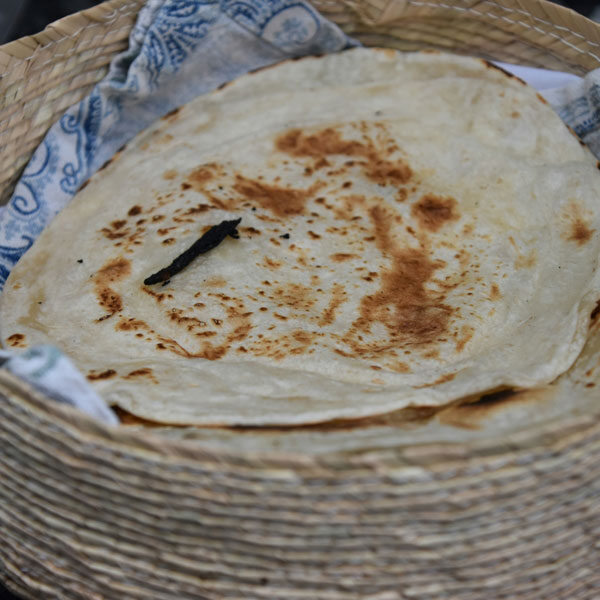
Chapati is a traditional East African flatbread made from flour, water, oil, and salt–kneaded, rolled, and cooked slowly on a hot pan until golden and layered. It is often present at celebrations, holidays, and family meals. It is torn by hand, shared freely, and enjoyed together.
There is something fitting about chapati at Easter.
It is made patiently.
It is prepared intentionally.
And it is always meant to be shared.
This year, as our staff break chapati together, we will remember the One who broke bread with His disciples before resolutely walking toward Jerusalem, and ultimately toward the cross.
If you want to make your own Chapati this Easter, just download the recipe below! It was put together by our staff in Nairobi.
Download the Recipe